Premium Biodegradable Kraft Paper - Sustainable Packaging Solutions for Eco-Conscious Businesses

Get a Free Quote

Our representative will contact you soon.
Email
Name
Company Name
Message
0/1000

biodegradable kraft paper

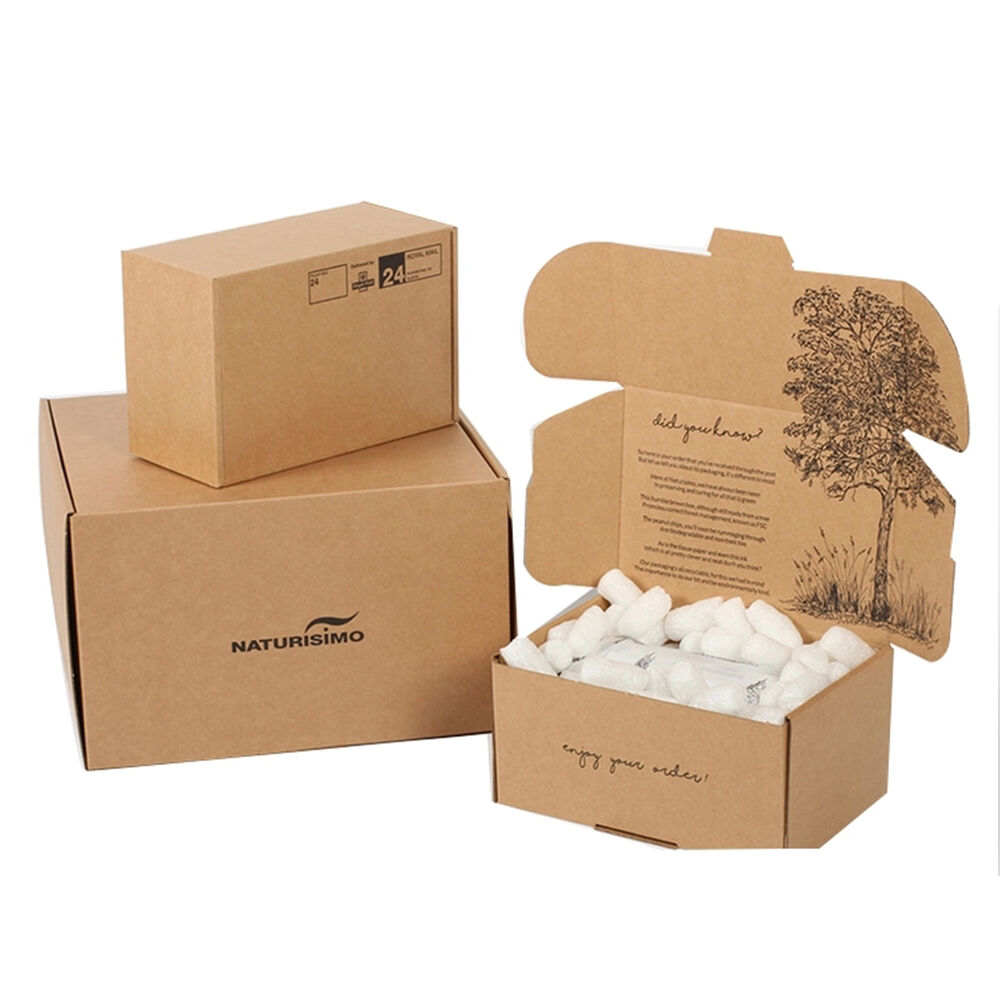
Biodegradable kraft paper represents a revolutionary advancement in sustainable packaging materials, offering businesses and consumers an environmentally responsible alternative to traditional synthetic packaging solutions. This innovative material combines the natural strength and durability of conventional kraft paper with enhanced biodegradable properties that allow it to decompose naturally without leaving harmful residues in the environment. The primary function of biodegradable kraft paper is to provide robust, reliable packaging while minimizing ecological impact throughout its entire lifecycle. Manufactured from renewable wood pulp sources, this material undergoes specialized processing that maintains its structural integrity while ensuring rapid decomposition once disposed of properly. The technological features of biodegradable kraft paper include superior tear resistance, excellent moisture management capabilities, and customizable thickness options ranging from lightweight wrapping grades to heavy-duty industrial applications. Advanced manufacturing techniques incorporate natural bonding agents and avoid synthetic additives, ensuring complete biodegradability within composting environments. The material exhibits remarkable versatility in printing and finishing processes, accepting various ink types and coating applications without compromising its environmental credentials. Applications for biodegradable kraft paper span numerous industries and use cases. In food service, it serves as an ideal solution for take-out containers, sandwich wraps, bakery bags, and grocery packaging where direct food contact requires both safety and sustainability. Retail businesses utilize biodegradable kraft paper for shopping bags, product wrapping, and protective cushioning materials. The e-commerce sector increasingly adopts this material for shipping envelopes, box liners, and void fill applications. Manufacturing operations employ biodegradable kraft paper as interleaving sheets, surface protection layers, and component separation materials. The agricultural industry benefits from its use in seedling pots, mulch sheets, and organic produce packaging. Additionally, biodegradable kraft paper finds applications in medical supplies packaging, industrial wrapping, and consumer goods protection where environmental responsibility aligns with brand values and regulatory requirements.

New Product Releases

Biodegradable kraft paper delivers substantial environmental benefits that address growing concerns about plastic pollution and waste accumulation in landfills and natural ecosystems. This material naturally breaks down into organic components within months rather than persisting for decades like conventional plastics, significantly reducing long-term environmental burden. The decomposition process occurs through microbial action, converting the paper into carbon dioxide, water, and biomass without releasing toxic chemicals or microplastics into soil or waterways. Businesses adopting biodegradable kraft paper demonstrate tangible commitment to sustainability, enhancing brand reputation and appealing to environmentally conscious consumers who increasingly prefer products with minimal ecological footprint. Cost effectiveness represents another compelling advantage, as biodegradable kraft paper production utilizes abundant renewable resources and established manufacturing infrastructure, making it price-competitive with traditional packaging materials while offering superior environmental performance. The material requires no specialized disposal facilities, composting naturally in backyard compost bins or commercial composting operations, eliminating expensive waste management requirements. Functional performance characteristics provide practical advantages for everyday applications. The natural fiber structure offers excellent breathability, preventing moisture accumulation that could compromise product quality, particularly beneficial for fresh foods, baked goods, and moisture-sensitive items. Superior strength-to-weight ratios ensure effective product protection without excessive material usage, optimizing shipping costs and storage efficiency. The material maintains structural integrity across various temperature ranges, performing reliably in refrigerated environments and ambient conditions alike. Customization possibilities enable businesses to tailor biodegradable kraft paper precisely to specific requirements. Manufacturers can adjust thickness, texture, and density to match application demands, from delicate tissue-weight papers to robust industrial-grade sheets. Printing capabilities accommodate brand messaging, product information, and decorative designs using eco-friendly inks that complement the material's sustainable profile. Regulatory compliance advantages simplify business operations as environmental regulations increasingly restrict single-use plastics and non-recyclable materials. Biodegradable kraft paper meets or exceeds emerging packaging standards worldwide, future-proofing supply chains against legislative changes. The material's natural composition avoids concerns about chemical migration, making it particularly suitable for direct food contact applications where safety regulations demand rigorous standards. Consumer appeal extends beyond environmental considerations, as biodegradable kraft paper offers tactile and aesthetic qualities that convey authenticity, naturalness, and quality craftsmanship, attributes that resonate strongly with contemporary market preferences and enhance perceived product value.

Tips And Tricks

How to Embed AR Tech into Calendar for Better Brand Interaction?

06

May

How to Embed AR Tech into Calendar for Better Brand Interaction?

Augmented reality is transforming how brands connect with their audiences, moving beyond passive visual experiences to create immersive touchpoints that drive engagement and recall. For businesses seeking innovative ways to maintain year-round brand ...
View More
How to Test Shipping Box Pressure Capacity Under Stacking?

06

May

How to Test Shipping Box Pressure Capacity Under Stacking?

Understanding how to test shipping box pressure capacity under stacking is critical for businesses that rely on efficient warehousing and transportation logistics. When corrugated boxes are stacked in warehouses or transport vehicles, they must withs...
View More
What Are the Eco Benefits of Shipping Box in Circular Logic?

06

May

What Are the Eco Benefits of Shipping Box in Circular Logic?

The global shift toward sustainable packaging has placed the humble shipping box at the center of environmental innovation, particularly within circular economy frameworks. As businesses face mounting pressure to reduce their carbon footprint and min...
View More
What Are the Innovative Trends for Brochure and Digital Content?

06

May

What Are the Innovative Trends for Brochure and Digital Content?

The landscape of marketing communication has undergone a dramatic transformation as businesses navigate the intersection of traditional print materials and digital platforms. Understanding the innovative trends shaping brochure and digital content is...
View More

Get a Free Quote

Our representative will contact you soon.
Email
Name
Company Name
Message
0/1000

biodegradable kraft paper

Complete Environmental Decomposition Without Harmful Residue

Complete Environmental Decomposition Without Harmful Residue

The most transformative feature of biodegradable kraft paper lies in its ability to return completely to nature through biological decomposition processes, fundamentally distinguishing it from petroleum-based packaging materials that persist indefinitely in the environment. This material achieves full biodegradation within 90 to 180 days under appropriate composting conditions, breaking down into simple organic compounds that enrich rather than contaminate soil ecosystems. The decomposition mechanism relies on naturally occurring microorganisms including bacteria, fungi, and other decomposer organisms that recognize the cellulose fiber structure as digestible organic matter. These microbes secrete enzymes that break molecular bonds within the paper fibers, gradually converting complex cellulose chains into simpler sugars, which are then metabolized into carbon dioxide, water, and biomass. Unlike synthetic materials that fragment into persistent microplastics or release toxic additives during degradation, biodegradable kraft paper leaves zero harmful residues, contributing beneficial organic matter to soil rather than accumulating as pollution. This complete decomposition capability addresses one of the most pressing environmental challenges facing modern society: the accumulation of non-degradable waste in landfills, oceans, and natural habitats. Traditional packaging materials occupy landfill space for generations, leaching chemicals and creating long-term environmental liabilities. Biodegradable kraft paper eliminates these concerns entirely, transforming from functional packaging material to nutrient-rich compost that supports plant growth and soil health. The environmental value extends beyond waste reduction to include carbon sequestration benefits. Trees used in kraft paper production absorb atmospheric carbon dioxide during growth, effectively storing carbon within the paper fibers throughout the product lifecycle. Upon composting, a portion of this carbon integrates into stable soil organic matter, providing modest but meaningful carbon sequestration. For businesses and consumers seeking to minimize environmental impact, this complete biodegradation capability offers peace of mind that packaging choices align with ecological responsibility. Disposal flexibility represents another practical dimension of this advantage, as biodegradable kraft paper accommodates multiple end-of-life pathways including home composting, municipal composting facilities, and even breakdown in natural environments should accidental littering occur, though proper disposal remains preferable for optimal decomposition conditions.
Superior Strength and Versatility for Diverse Applications

Superior Strength and Versatility for Diverse Applications

Biodegradable kraft paper demonstrates exceptional mechanical properties that enable reliable performance across an extraordinarily wide range of packaging and industrial applications, dispelling misconceptions that environmentally friendly materials necessarily compromise functional effectiveness. The material derives its impressive strength from long cellulose fibers that interlock during manufacturing, creating a resilient matrix capable of withstanding substantial tensile forces, puncture resistance demands, and handling stresses encountered throughout distribution chains. This robust fiber structure allows biodegradable kraft paper to support significant weight loads, making it suitable for heavy-duty applications including industrial component wrapping, building material packaging, and bulk commodity containment. Tear resistance properties prevent propagation of damage from initial punctures or edge cuts, maintaining package integrity even when subjected to rough handling conditions common in shipping and warehousing environments. The material exhibits remarkable versatility in thickness and density configurations, accommodating specifications from delicate 20-gram tissue papers for protective wrapping to heavy 200-gram industrial grades for structural packaging applications. Manufacturers can engineer biodegradable kraft paper with specific characteristics tailored to particular use cases, adjusting fiber length, processing parameters, and calendaring treatments to optimize properties like smoothness for printing, stiffness for structural applications, or flexibility for wrapping irregular shapes. Surface treatments enhance functionality without compromising biodegradability, including natural wax coatings for moisture resistance, clay coatings for improved printability, and embossing for texture and grip enhancement. This adaptability enables biodegradable kraft paper to replace conventional materials across virtually every packaging category. In food service applications, it performs excellently as sandwich wraps, bakery bags, and take-out containers where grease resistance and food safety are paramount. Retail environments benefit from shopping bags, gift wrap, and product packaging that combine attractive appearance with environmental responsibility. E-commerce operations utilize biodegradable kraft paper for padded mailers, void fill, and protective wrapping that cushions products during transit while maintaining sustainability commitments. Industrial sectors employ the material for interleaving sheets that prevent surface scratching between stacked components, rust-preventive wrapping that allows moisture vapor transmission while protecting metal surfaces, and temporary surface protection during manufacturing processes. The printing versatility of biodegradable kraft paper supports brand differentiation and product information communication through flexographic, digital, and offset printing technologies, accepting various ink formulations including water-based and soy-based options that complement environmental attributes.
Cost-Effective Sustainability That Enhances Brand Value

Cost-Effective Sustainability That Enhances Brand Value

Biodegradable kraft paper delivers a compelling economic proposition by combining competitive pricing with substantial brand value enhancement, proving that environmental responsibility and business profitability can align synergistically rather than existing in opposition. The material leverages established, efficient manufacturing processes refined over decades of kraft paper production, avoiding the premium costs often associated with emerging green technologies. Raw material sourcing from sustainably managed forests provides renewable, abundant fiber supplies at stable prices less vulnerable to the petroleum price volatility affecting synthetic packaging materials. Production efficiency continues improving through technological advances in pulping, refining, and sheet forming that reduce energy consumption, water usage, and processing time, translating to favorable cost structures for end users. When conducting total cost analysis rather than focusing solely on material purchase price, biodegradable kraft paper frequently demonstrates superior economics compared to alternatives. The material eliminates specialized disposal costs increasingly imposed on non-recyclable packaging through extended producer responsibility regulations and waste management fees. Lightweight characteristics relative to strength properties reduce shipping costs by minimizing package weight without compromising protection, generating savings that accumulate substantially across high-volume operations. Storage efficiency results from the material's compatibility with standard warehousing equipment and space requirements, avoiding investments in specialized handling or environmental control systems. The brand value enhancement potential of biodegradable kraft paper represents perhaps its most significant economic advantage in markets where consumer preferences increasingly prioritize sustainability attributes. Numerous consumer surveys consistently demonstrate willingness to pay premium prices for products packaged in environmentally responsible materials, directly improving profit margins for brands adopting biodegradable kraft paper. The material serves as tangible evidence of corporate environmental commitment, differentiating brands in crowded marketplaces where sustainability claims require substantiation beyond marketing rhetoric. Packaging made from biodegradable kraft paper communicates brand values immediately through visual and tactile properties, creating positive first impressions that influence purchase decisions and brand loyalty. Social media amplification magnifies this brand value, as consumers frequently share and celebrate brands demonstrating authentic environmental leadership, generating organic marketing exposure that would require substantial paid advertising investments to achieve through conventional channels. Regulatory compliance advantages provide risk mitigation value by positioning businesses ahead of emerging packaging restrictions and plastic reduction mandates being implemented globally. Early adoption of biodegradable kraft paper insulates companies from disruption when regulations change, avoiding scrambles to reformulate packaging under deadline pressure. The material's natural composition and established safety profile simplify regulatory approval processes for food contact applications, reducing time-to-market for new products and packaging innovations.

Get a Free Quote

Our representative will contact you soon.
Email
Name
Company Name
Message
0/1000