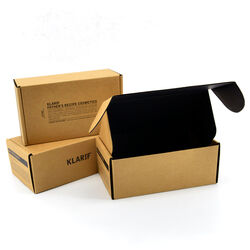
Wholesale Packaging Solutions: Cost-Effective Bulk Packaging for Business Efficiency

Get a Free Quote

Our representative will contact you soon.
Email
Name
Company Name
Message
0/1000

wholesale packaging

Wholesale packaging serves as a fundamental component in the supply chain management system, designed specifically for bulk distribution and commercial-scale operations. This packaging solution encompasses various materials, designs, and structural configurations tailored to protect large quantities of products during transportation, storage, and handling processes. The primary function of wholesale packaging involves safeguarding merchandise from physical damage, environmental factors, and contamination while maintaining product integrity throughout the distribution network. These packaging systems incorporate advanced protective mechanisms including cushioning materials, reinforced structures, and moisture-resistant barriers that ensure optimal product preservation. The technological features embedded within modern wholesale packaging solutions include stackable designs for efficient warehouse storage, standardized dimensions compatible with logistics equipment, and labeling systems that facilitate inventory management and tracking capabilities. Material selection plays a crucial role, with options ranging from corrugated cardboard and plastic containers to wooden crates and metal bins, each chosen based on specific product requirements and shipping conditions. Wholesale packaging applications span across numerous industries including food and beverage distribution, pharmaceutical supply chains, electronics manufacturing, retail merchandise handling, and agricultural product transportation. The scalability of these packaging solutions allows businesses to accommodate varying volume requirements while maintaining cost-effectiveness and operational efficiency. Modern wholesale packaging integrates sustainability considerations through recyclable materials, reusable container systems, and optimized designs that minimize material waste. The structural engineering of these packages accounts for weight distribution, compression strength, and stacking limits to prevent product damage during transit. Additionally, wholesale packaging incorporates identification features such as barcodes, RFID tags, and printed information that streamline logistics operations and enhance supply chain visibility. The versatility of wholesale packaging makes it indispensable for manufacturers, distributors, retailers, and logistics providers who require reliable protection for products moving through complex distribution networks while supporting efficient handling procedures and cost-effective bulk transportation solutions.

New Product Recommendations

Businesses benefit significantly from implementing wholesale packaging through substantial cost reduction achieved by purchasing materials in bulk quantities, which dramatically lowers per-unit expenses compared to retail-scale packaging purchases. This economic advantage extends beyond initial material costs, as standardized wholesale packaging reduces labor expenses through simplified packing processes and faster handling times in warehouse environments. The protective qualities of wholesale packaging directly minimize product damage rates during shipping and storage, translating into fewer returns, reduced replacement costs, and improved customer satisfaction metrics. Companies experience enhanced operational efficiency when utilizing wholesale packaging because standardized dimensions allow for optimized loading configurations in trucks, containers, and warehouse spaces, maximizing storage capacity and transportation efficiency. The durability of wholesale packaging materials ensures products remain secure throughout multiple handling stages, from manufacturing facilities to distribution centers and final delivery points, maintaining product quality and reducing loss percentages. Environmental benefits emerge as businesses adopt wholesale packaging solutions that emphasize recyclable materials and reusable containers, supporting sustainability initiatives while potentially qualifying for green business certifications and meeting consumer expectations for eco-conscious practices. Inventory management becomes more streamlined with wholesale packaging systems that incorporate clear labeling, tracking capabilities, and organized storage solutions, enabling faster stock rotation and improved accuracy in order fulfillment processes. The scalability of wholesale packaging allows businesses to adjust order volumes according to seasonal demands, growth projections, and market fluctuations without compromising packaging quality or facing supply shortages. Brand presentation remains professional even in bulk shipping scenarios, as wholesale packaging can incorporate company logos, handling instructions, and product information that maintain brand consistency throughout the distribution chain. Supply chain reliability improves when businesses establish relationships with wholesale packaging suppliers who provide consistent quality, dependable delivery schedules, and responsive customer service for addressing specific packaging requirements. The versatility of wholesale packaging accommodates diverse product types, sizes, and fragility levels through customizable options including insert designs, protective layers, and specialized materials that meet unique shipping challenges. Time savings manifest throughout operations as pre-assembled wholesale packaging reduces preparation time, allowing staff to focus on core business activities rather than packaging construction. Risk mitigation occurs through compliance with shipping regulations and industry standards that wholesale packaging providers incorporate into their designs, protecting businesses from potential legal issues and ensuring smooth international shipping processes. Competitive advantages develop as businesses utilizing efficient wholesale packaging can offer faster delivery times, lower shipping costs, and better product condition upon arrival, differentiating themselves in crowded marketplaces and building customer loyalty through reliable service quality and consistent product protection standards.

Latest News

What are the Application Strategies for Sticker in Promotion?

08

May

What are the Application Strategies for Sticker in Promotion?

Promotional sticker campaigns have evolved from simple brand markings into sophisticated marketing instruments that drive consumer engagement, brand recall, and measurable conversion outcomes across multiple touchpoints. Understanding the strategic a...
View More
Why Do Comprehensive Firms Provide Better Magazine Layouts?

21

May

Why Do Comprehensive Firms Provide Better Magazine Layouts?

In the competitive world of print media and corporate communication, the quality of magazine layouts can make or break reader engagement and brand perception. Business decision-makers increasingly recognize that comprehensive firms—those offering int...
View More
How to Measure the Flexible Production of Shipping Box Firms?

15

May

How to Measure the Flexible Production of Shipping Box Firms?

In the modern packaging industry, evaluating the flexible production of shipping box firms has become a critical factor for businesses seeking reliable manufacturing partners. As customer demands shift toward customization, faster turnaround times, a...
View More
Why Do Patent Printing Techs Make Brochure Image Details Stunning?

06

May

Why Do Patent Printing Techs Make Brochure Image Details Stunning?

In the competitive landscape of corporate marketing and brand communication, the visual impact of printed brochures can determine whether a prospective client engages with your message or discards it within seconds. Businesses investing in high-quali...
View More

Get a Free Quote

Our representative will contact you soon.
Email
Name
Company Name
Message
0/1000

wholesale packaging

Cost Efficiency and Economic Value Through Bulk Purchasing

Cost Efficiency and Economic Value Through Bulk Purchasing

The financial advantages of wholesale packaging represent one of the most compelling reasons businesses transition from smaller-scale packaging solutions to bulk procurement strategies. When companies purchase wholesale packaging, they unlock significant per-unit cost reductions that directly impact bottom-line profitability and operational budgets. These savings accumulate across multiple dimensions of business operations, starting with the raw material costs themselves. Suppliers offer substantial discounts for bulk orders because they benefit from economies of scale in manufacturing, reduced transaction processing, and lower logistics expenses when fulfilling larger orders. These supplier savings transfer partially to customers, creating win-win scenarios where both parties benefit from efficiency gains. Beyond the immediate material cost savings, wholesale packaging reduces hidden expenses that often escape initial cost calculations but significantly affect overall expenditure. Labor costs decrease substantially when workers handle standardized, ready-to-use packaging materials rather than assembling complex packaging solutions or managing multiple supplier relationships for different packaging components. The time saved translates directly into productivity improvements, allowing staff allocation toward revenue-generating activities instead of packaging preparation tasks. Storage optimization represents another financial benefit, as wholesale packaging typically arrives in compact, efficiently designed shipments that maximize warehouse space utilization. Businesses avoid the premium costs associated with emergency packaging orders or expedited shipping by maintaining adequate wholesale packaging inventory, ensuring continuous operations without disruption. The predictability of wholesale packaging costs facilitates more accurate financial forecasting and budgeting processes, enabling better cash flow management and strategic planning capabilities. Companies also reduce administrative overhead by consolidating packaging suppliers, minimizing invoice processing, vendor management responsibilities, and quality control procedures across fewer business relationships. The durability and protective qualities of wholesale packaging generate indirect savings by reducing product damage rates, which decrease replacement costs, return processing expenses, and customer service burdens associated with damaged goods. These cumulative financial benefits create competitive pricing flexibility, allowing businesses to either improve profit margins or pass savings to customers through reduced product prices, thereby gaining market share advantages and strengthening customer relationships through value-focused positioning strategies.
Enhanced Product Protection and Quality Preservation

Enhanced Product Protection and Quality Preservation

The protective capabilities of wholesale packaging systems represent critical infrastructure for maintaining product integrity throughout complex distribution networks and varied environmental conditions. Modern wholesale packaging incorporates sophisticated engineering principles that address multiple threat categories including physical impacts, temperature fluctuations, moisture exposure, contamination risks, and compression forces during stacked storage configurations. The structural design of wholesale packaging utilizes materials specifically selected for their protective properties, with corrugated cardboard offering excellent cushioning and impact absorption, plastic containers providing moisture barriers and chemical resistance, and specialized foams delivering vibration dampening during transportation. These protective features prove essential for businesses handling fragile items, perishable goods, or high-value merchandise where damage translates into significant financial losses and customer dissatisfaction. The multi-layer construction common in quality wholesale packaging creates redundant protection systems, ensuring that even if outer layers sustain damage, inner protective elements continue safeguarding products until delivery completion. Environmental protection extends beyond physical damage prevention to include barrier properties that shield products from humidity, dust, light exposure, and temperature variations that could degrade product quality or reduce shelf life. Wholesale packaging designed for food products incorporates food-grade materials meeting stringent safety regulations while providing necessary protection against contamination and spoilage throughout supply chains. The standardization inherent in wholesale packaging ensures consistent protection levels across entire product shipments, eliminating the variability and potential weak points that occur with improvised or inconsistent packaging approaches. Advanced wholesale packaging solutions integrate cushioning systems, corner protectors, internal dividers, and suspension mechanisms that isolate products from external forces, particularly important for electronics, glassware, and precision instruments requiring stable transport conditions. The testing protocols applied to wholesale packaging materials verify protection capabilities under realistic stress conditions including drop tests, compression testing, vibration simulation, and environmental exposure assessments that guarantee performance reliability. This comprehensive protection directly correlates with reduced insurance costs, as carriers and insurers recognize properly packaged goods as lower-risk shipments deserving preferential rates. Customer perception improves dramatically when products arrive in pristine condition, protected by robust wholesale packaging that demonstrates company commitment to quality and professionalism, fostering trust and encouraging repeat business relationships that drive long-term revenue growth and market reputation strength.
Operational Efficiency and Supply Chain Optimization

Operational Efficiency and Supply Chain Optimization

Wholesale packaging transforms logistics operations by introducing standardization, predictability, and systematic approaches that streamline every phase of product movement from manufacturing through final delivery. The operational benefits begin at the warehouse level where standardized wholesale packaging dimensions enable precise space planning, optimized shelving configurations, and maximum storage density calculations that increase facility capacity without physical expansion costs. These standardized sizes align with material handling equipment specifications, ensuring forklifts, pallet jacks, and automated retrieval systems operate at peak efficiency without adaptation requirements or special handling procedures that slow operations. The packaging consistency facilitates accurate inventory management through simplified counting processes, straightforward stock rotation systems, and reduced errors in order picking activities that plague operations dealing with varied packaging formats. Loading efficiency improves dramatically as transportation planners calculate exact quantities fitting within truck trailers, shipping containers, and cargo aircraft, maximizing payload utilization and reducing per-unit shipping costs through optimized space allocation. Wholesale packaging supports automation implementation by providing uniform dimensions and weights that automated systems reliably process, enabling businesses to adopt robotic handling, conveyor systems, and sorting technologies that further reduce labor requirements and increase throughput capacity. The time savings extend to receiving operations where standardized wholesale packaging accelerates inspection processes, simplifies quality verification, and speeds integration into inventory systems through predictable formats and consistent labeling conventions. Distribution center operations benefit from wholesale packaging through faster order fulfillment cycles, as workers quickly identify, retrieve, and prepare shipments using familiar packaging formats that require minimal handling time compared to varied packaging types demanding individual assessment. The tracking capabilities integrated into modern wholesale packaging systems, including barcode labels and RFID tags, provide real-time visibility throughout supply chains, enabling proactive management of potential delays, accurate delivery estimates, and data-driven optimization of routing decisions. Return processes become more manageable with wholesale packaging because standardized materials facilitate inspection, repackaging, and restocking procedures that process returned merchandise efficiently. Training requirements decrease substantially when warehouse staff work with consistent wholesale packaging formats, reducing onboarding time for new employees and minimizing errors from confusion over handling procedures for different packaging types. Supply chain resilience improves through wholesale packaging relationships that provide reliable availability, consistent quality, and responsive support during demand fluctuations or emergency requirements. The cumulative operational improvements from wholesale packaging adoption translate into faster order-to-delivery cycles, improved customer satisfaction scores, reduced operational costs, and enhanced competitive positioning in markets where delivery speed and reliability serve as key differentiators driving customer preferences and long-term business success.


Get a Free Quote

Our representative will contact you soon.
Email
Name
Company Name
Message
0/1000