EN



Custom Printed Soft Cover Fancy Art School Kids' Easy English Story Book Cardboard Brochure with Work Paper Board Color
- Overview
- Features
- Recommended Products
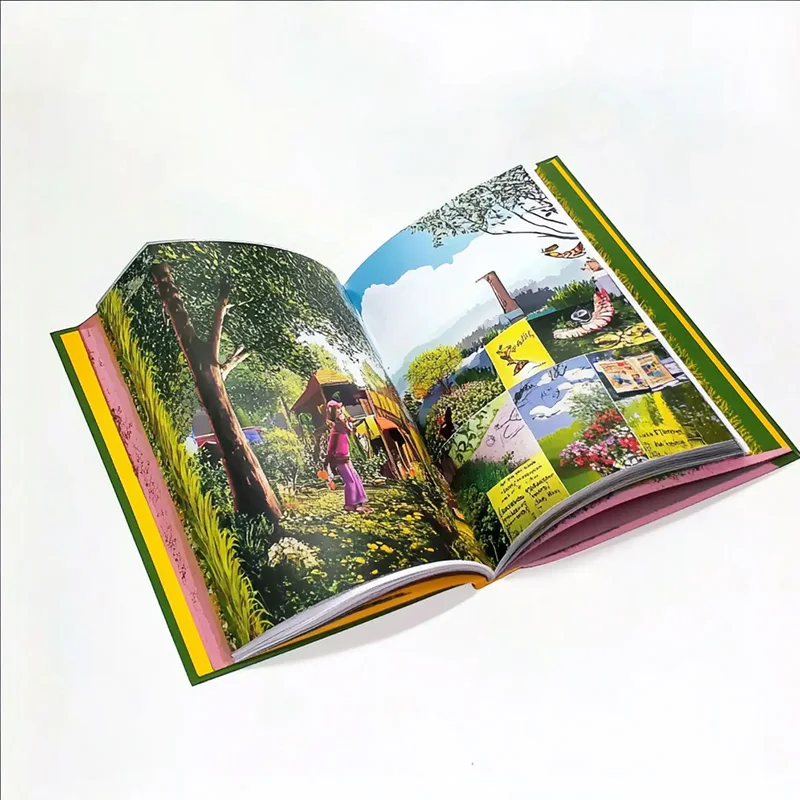
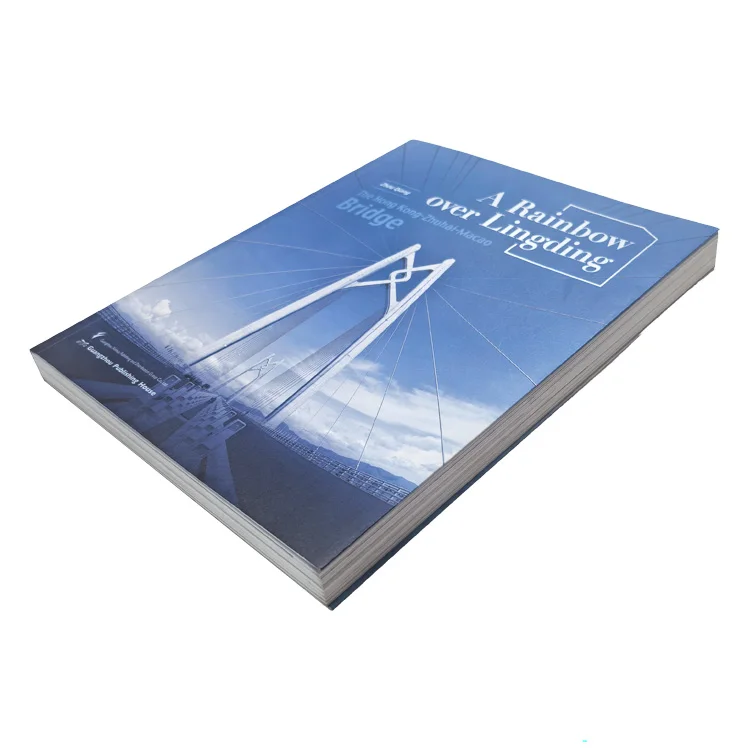
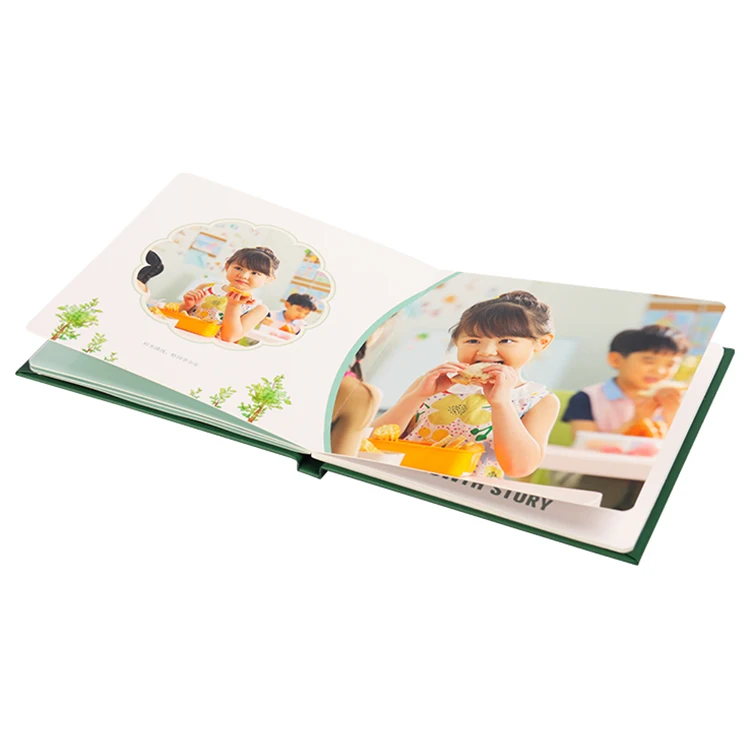
- Soft-cover book format: A custom printed soft-cover format gives a project a familiar story-book presentation while allowing the cover and interior artwork to be planned as one visual piece.
- Illustrated activity pages: The format can support letter-and-picture layouts, simple vocabulary prompts, sticker activities, and short story sequences.
- Custom paper selection: C1S art paper, glossy paper, matte paper, grey cardboard, and special paper are available material options for discussing the desired result.
- Color-printing options: Choose CMYK process printing or discuss Pantone colors when a specific project calls for that route.
- Finishing choices: Varnishing, glossy or matte lamination, foil stamping, debossing or embossing, and spot UV are listed surface-finishing options.
Custom Soft Cover English Story Book Printing
This custom printed soft cover book format is designed for illustrated English-learning stories, alphabet activities, sticker pages, and other child-focused reading projects. It combines a soft cover with customizable paper, color, and finishing choices so a project can be developed around its own artwork and page plan. The format works especially well when a story needs bright visual pages alongside simple word-recognition or picture-matching activities.
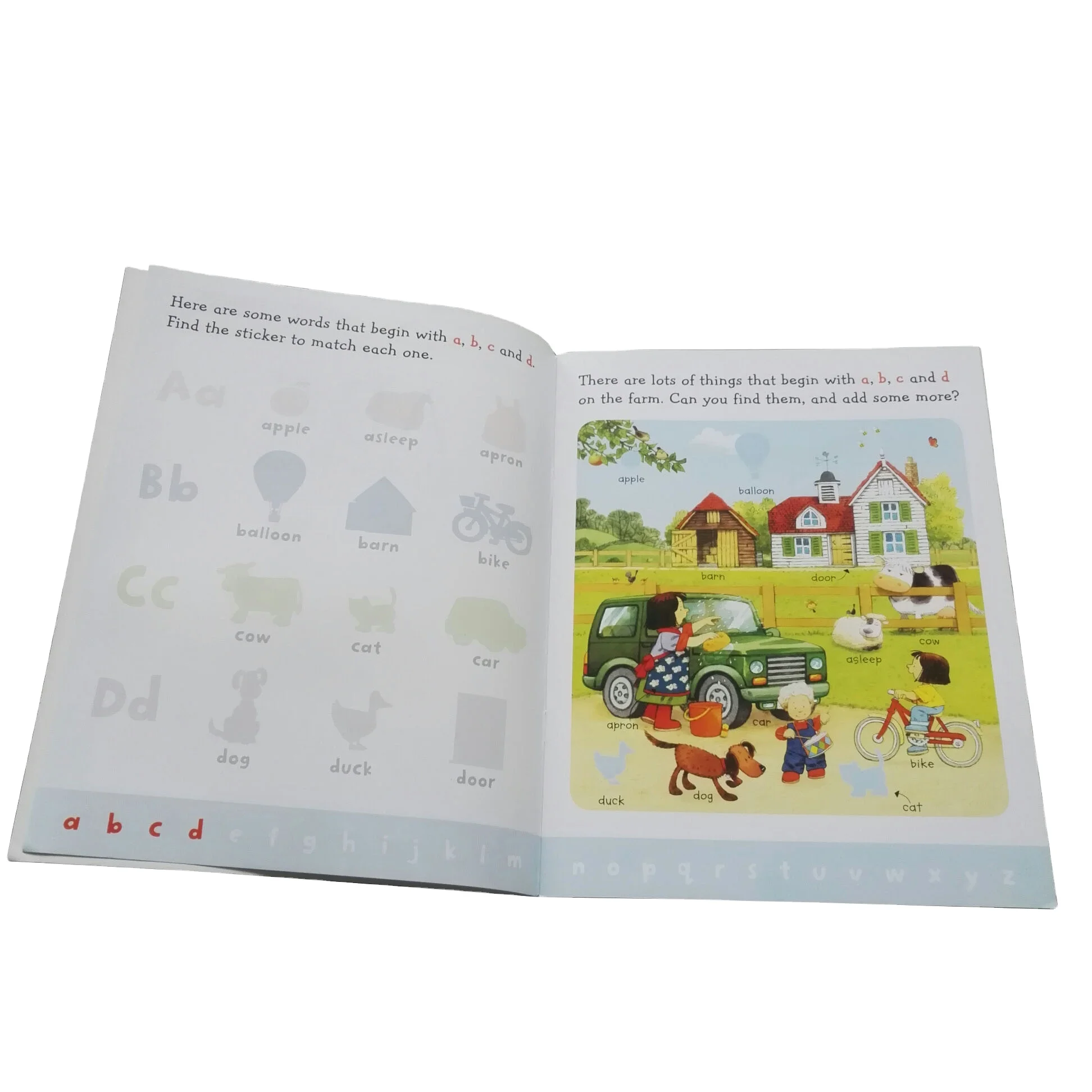
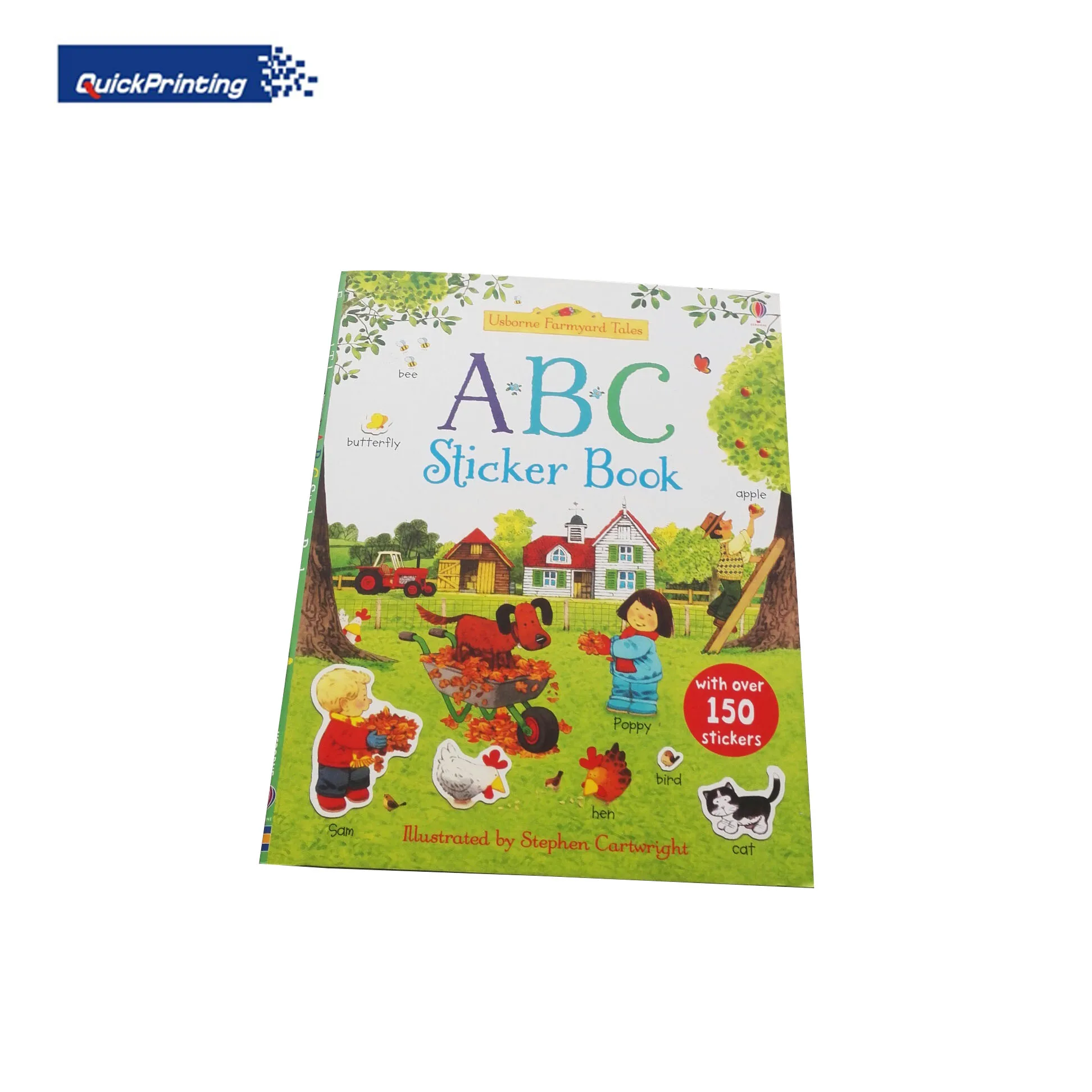
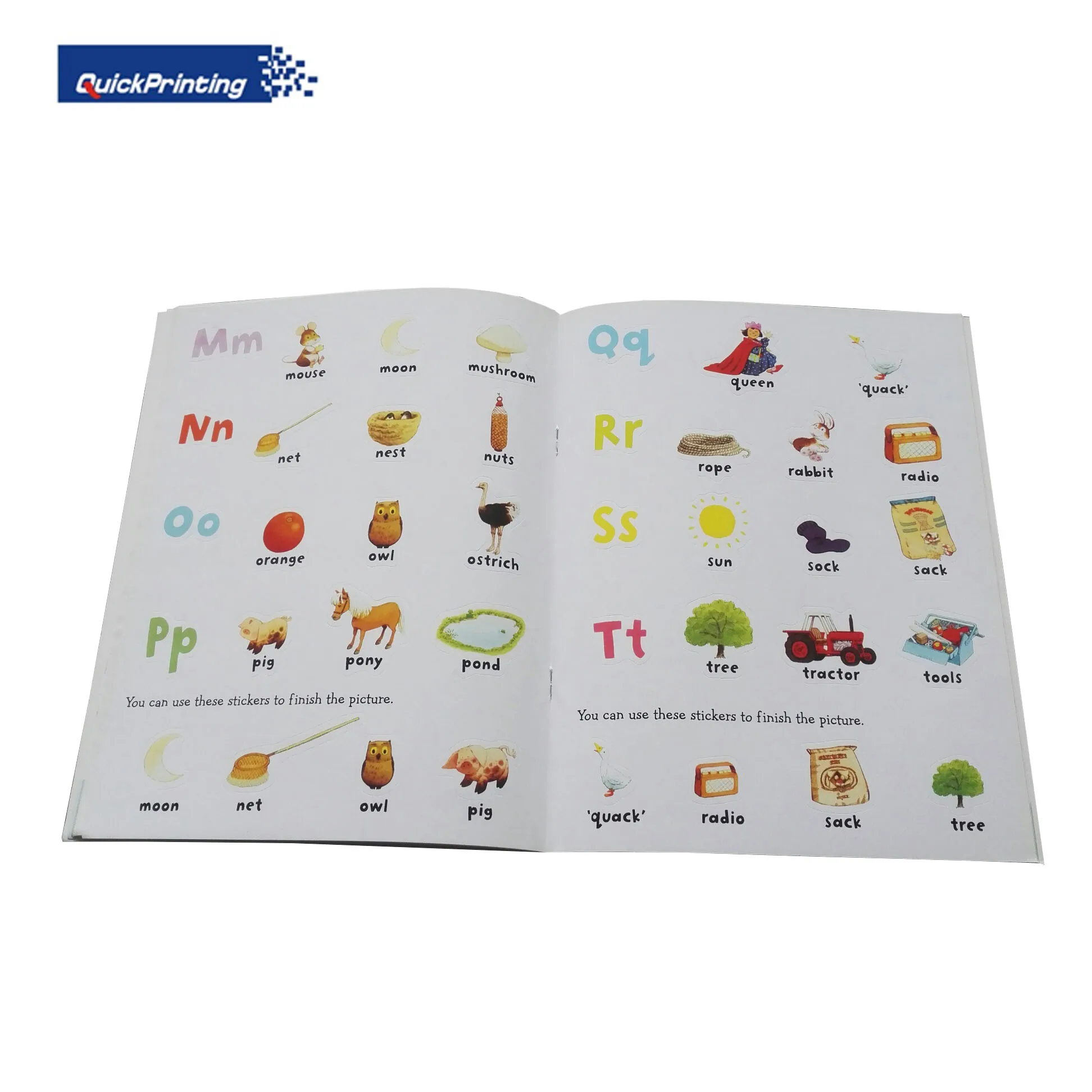
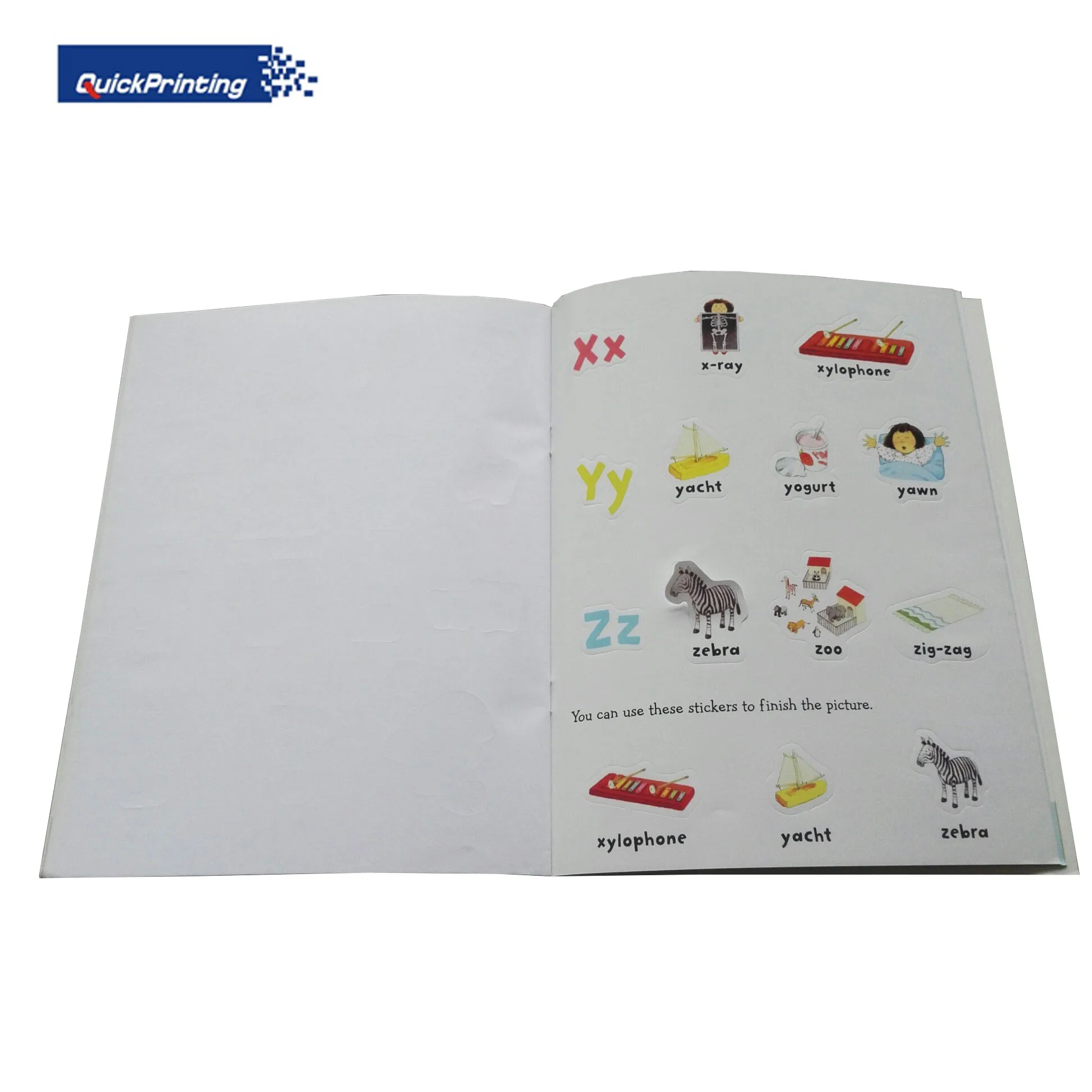
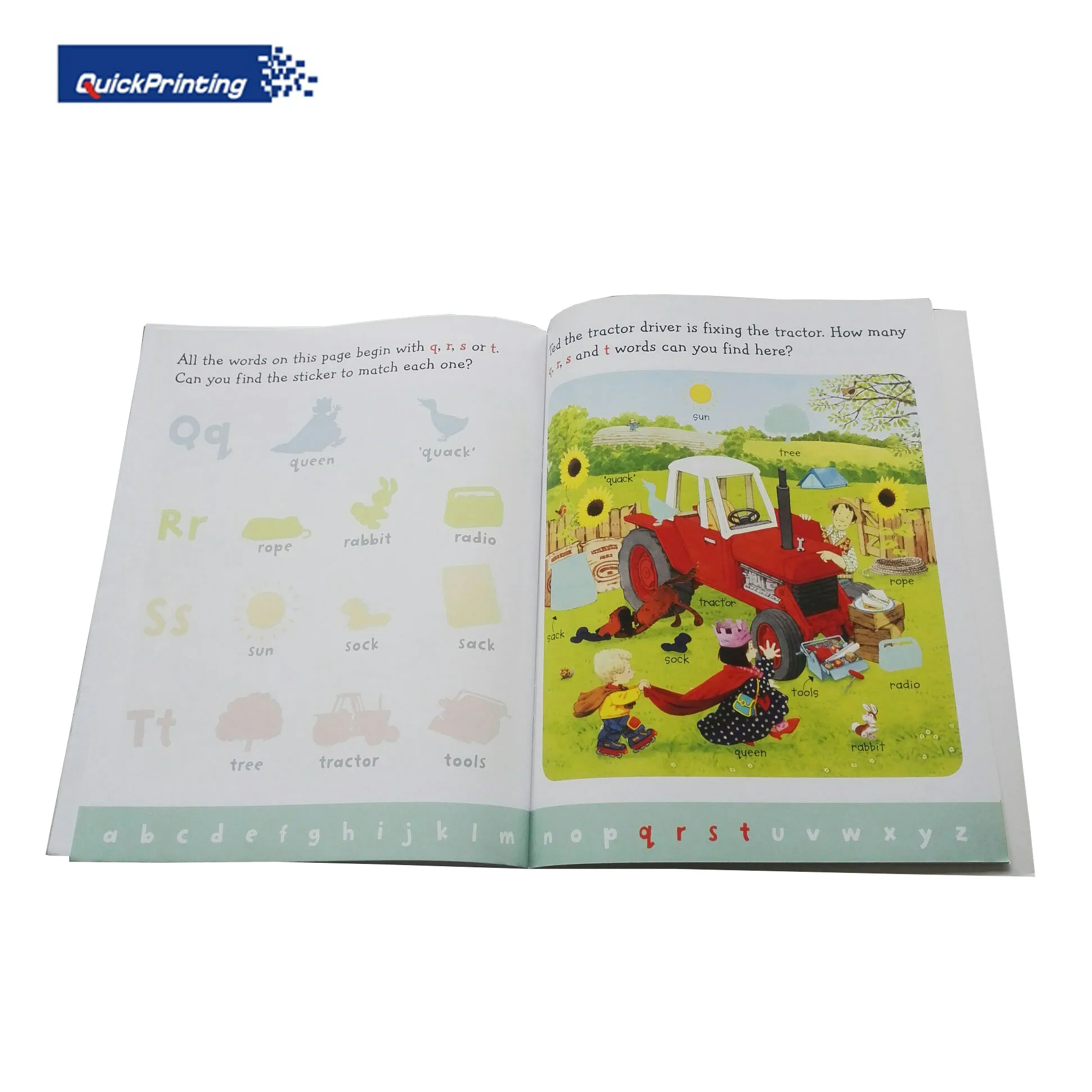
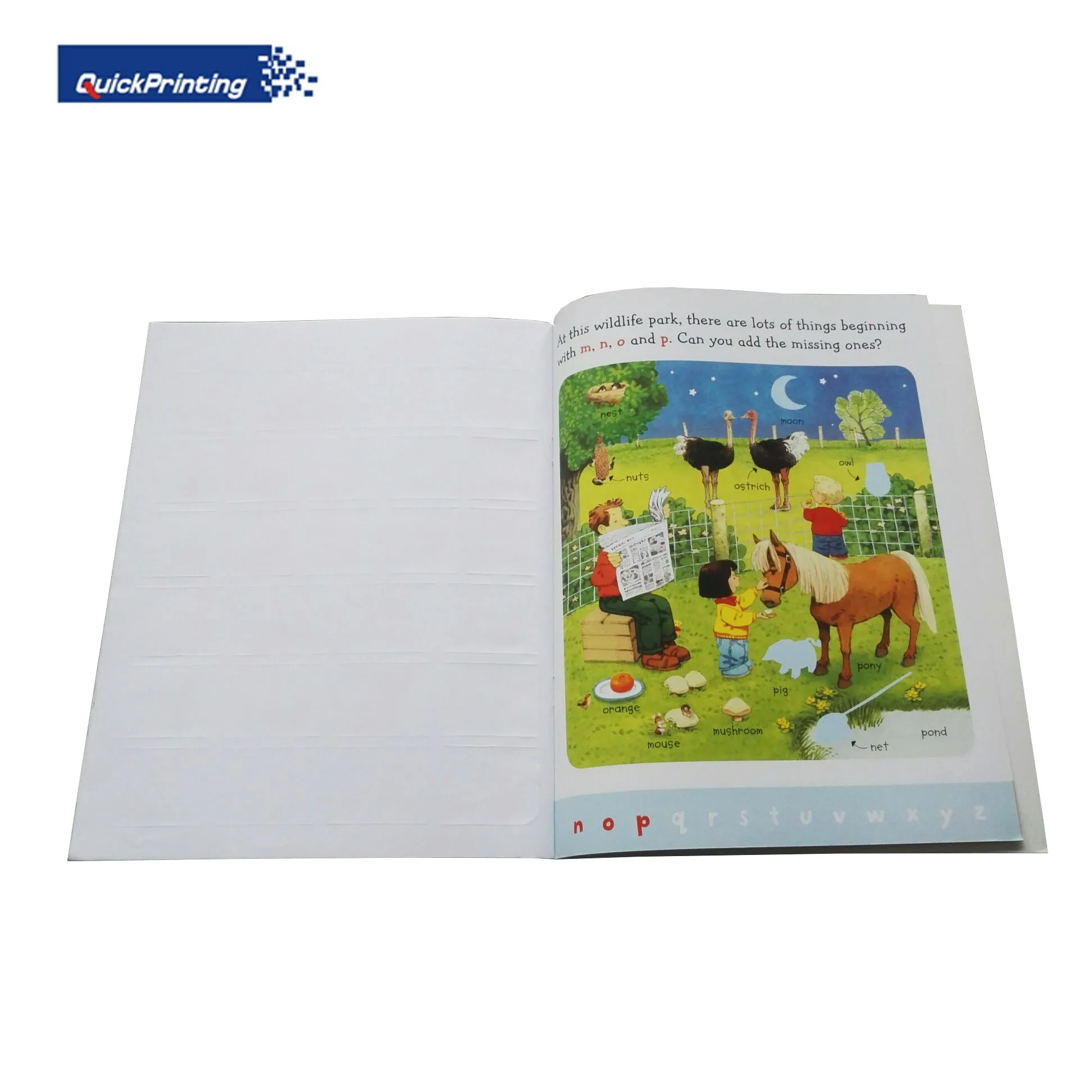
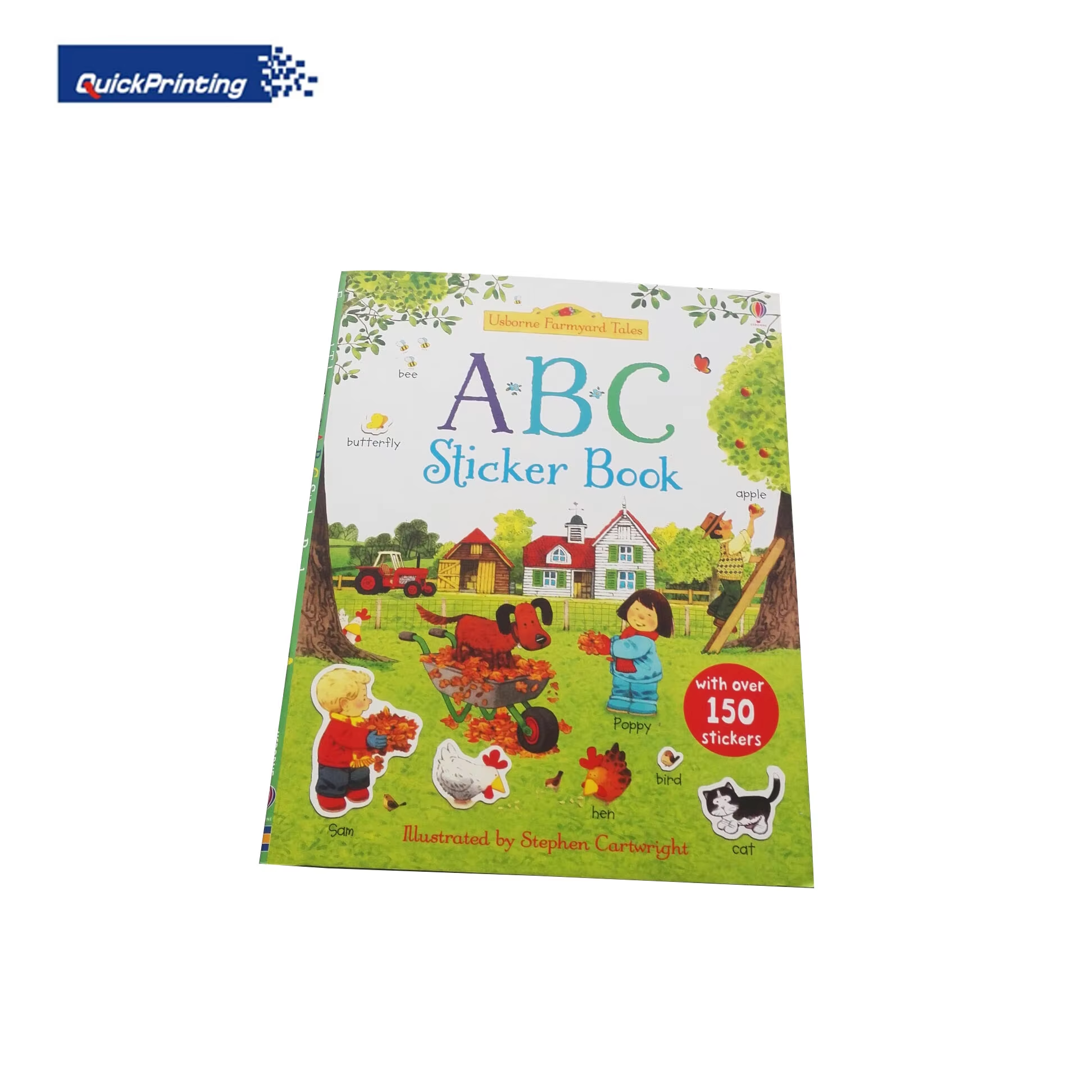
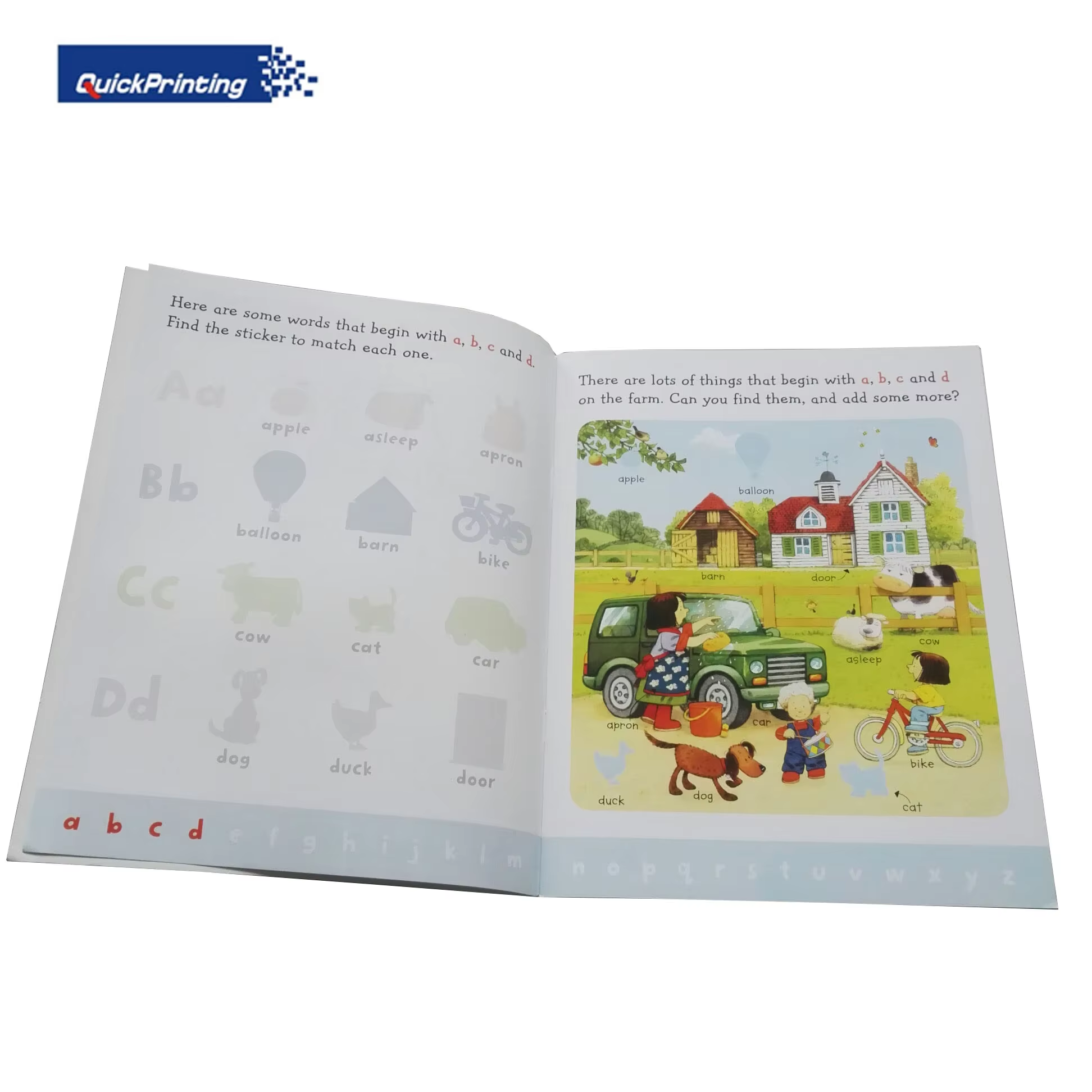
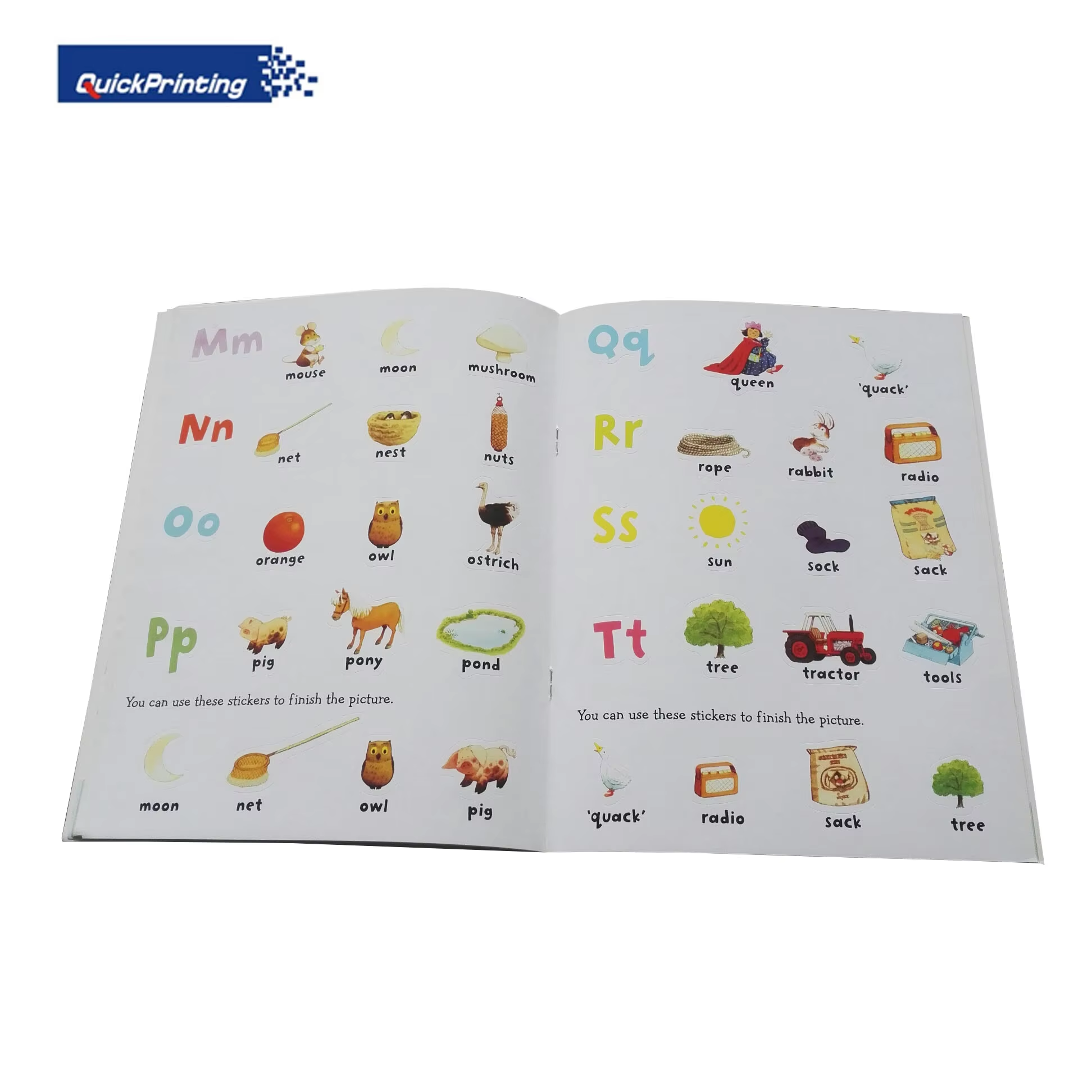
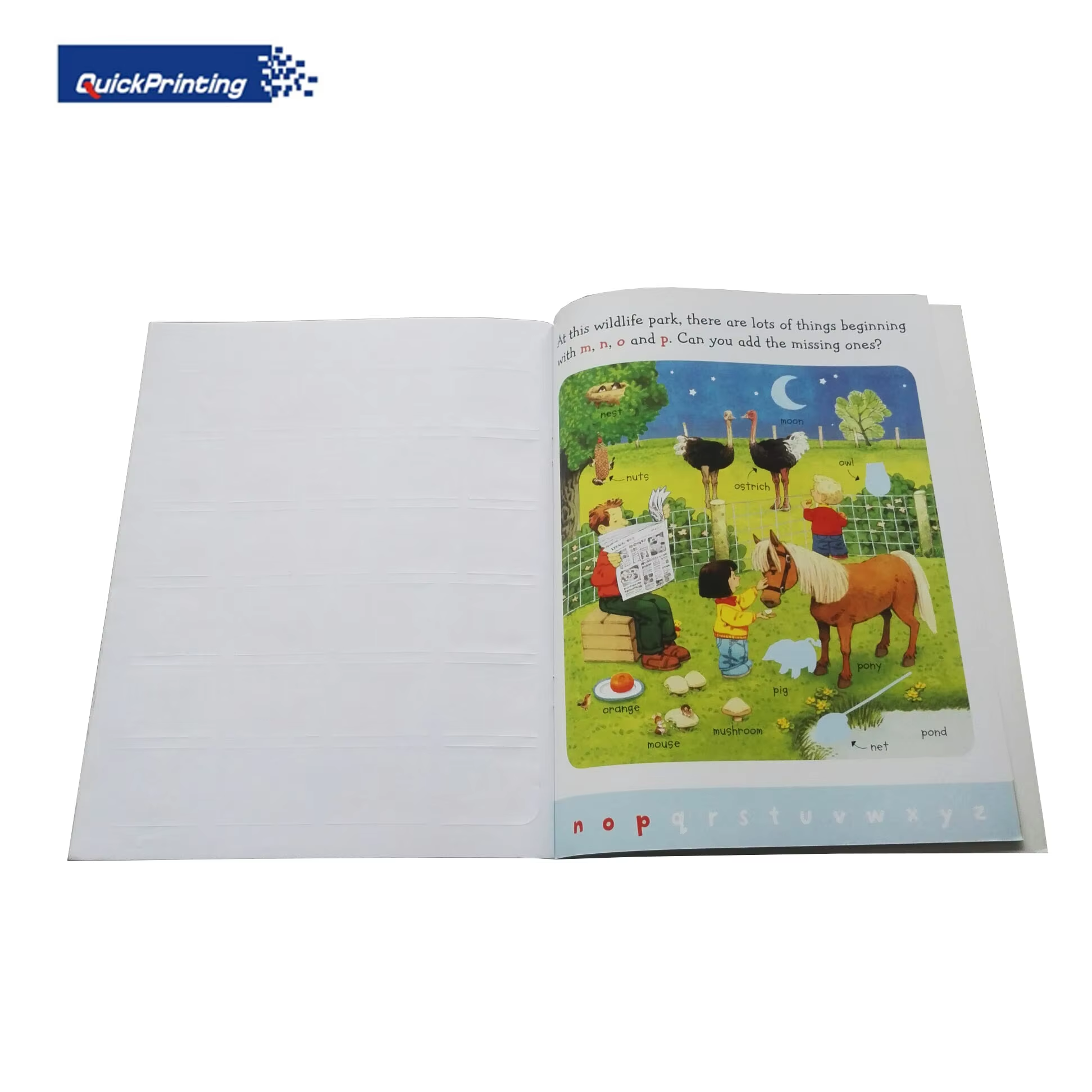
For a Custom Printed Soft Cover Fancy Art School Kids' Easy English Story Book Cardboard Brochure with Work Paper Board Color project, the important starting point is the reading experience you want to create. A book built around letters, pictures, or short story moments can use its cover, page layout, and print finish to make each spread easy to explore. The supplied sample pages demonstrate alphabet-led picture vocabulary, farm-themed objects, and sticker-matching prompts, giving the finished book a clear activity-book character.

Paper, Color, and Customization Options
Material choices include C1S art paper, glossy paper, matte paper, grey cardboard, and special paper. Each option gives the design team a different surface and structural starting point, so the selected stock should relate to the artwork, the intended handling, and the desired page feel. Rather than treating one paper option as suitable for every brief, the project can be specified according to its own content and format.
Size is made according to customer-specific requirements. That flexibility supports square, portrait, landscape, or other layouts when the artwork calls for a particular proportion. Before artwork moves into production, confirm the finished length, width, and height in millimeters so the cover and interior page design can be prepared around the intended trim size.
Color may be produced with a common four-color CMYK process or with Pantone colors. CMYK is a practical full-color process for illustrated pages, while Pantone can be discussed where a project calls for a defined spot-color approach. A proof or sample review can help confirm whether the selected color approach suits the artwork and overall visual expectation.
 |
 |
 |
 |
Features for Illustrated Learning Books
Finishing can shape the first impression of the cover and the visual emphasis of selected elements. Glossy or matte lamination changes the surface character, while foil stamping, debossing, embossing, or spot UV can be considered for details that need a distinct treatment. These are options to match to the design, not blanket additions to every book.


Uses for Story and Activity Projects
Early English-learning activities
Alphabet and picture-word pages can give young readers a simple route from letters to familiar objects. A page may present a letter, a picture, and a matching sticker prompt so the activity is easy to follow during individual reading or shared reading time.
Illustrated story books
Short stories and picture-led narratives can use the custom size, paper choice, and color process to bring illustrations and text together. When discussing page turns, picture the moment when a young reader carries the book or moves from one spread to the next; layout and format choices can be planned with that moment in mind.
Art-school and educational booklets
Custom booklets can organize illustrated exercises, language activities, or themed learning pages into a consistent printed format. The soft cover offers a straightforward way to present a series of pages while keeping the visual identity focused on the artwork.


Artwork and Inquiry Details
Artwork files for customized design can be supplied in AI, PDF, CDR, or InDesign format. Clear artwork preparation helps keep the cover, interior pages, color choices, and finishing discussion connected. In print terms, bleed is the image area that extends beyond the trim; it allows artwork to reach the edge after cutting when the page design requires it.
Choose the paper and surface treatment by the intended handling condition first, then assess whether the selected material supports the project’s visual and reading goals. A concise inquiry can include the finished size, artwork format, preferred paper, color process, finishing preference, and quantity. Those details create a useful starting point for a tailored discussion of your Custom Printed Soft Cover Fancy Art School Kids' Easy English Story Book Cardboard Brochure with Work Paper Board Color.
Planning a Clear Printed Book
A clear brief keeps the visual and practical choices connected. Start with the intended book size, then consider how illustrations, short text blocks, stickers, and activity prompts will sit on each page. The cover can introduce the theme, while the interior pages can repeat a stable visual rhythm for letters, objects, and matching tasks. This approach is useful for projects that move from one alphabet group or activity type to another while keeping the pages easy to recognize.
Paper selection can be discussed alongside the image style. C1S art paper, glossy paper, matte paper, grey cardboard, and special paper give a project several material directions to consider. A glossy surface can be discussed where a bright visual effect is desired, while a matte surface offers a different presentation. The selected option should match the project brief rather than follow a universal formula. Surface finishing can then be coordinated with the cover design, whether the project calls for varnishing, lamination, foil stamping, debossing, embossing, or spot UV.
Color planning is also part of the book’s visual system. CMYK can reproduce full-color illustrated pages, and Pantone colors are available for projects that require a specified spot-color approach. Keep the cover artwork, interior illustrations, and activity elements in the same color conversation so that the printed book has a consistent look from the opening cover through the final page.
The artwork file format should be included in the project discussion. AI, PDF, CDR, and InDesign are accepted formats for customized design. When artwork extends to the edge of a page, bleed allows the image area to continue beyond the trim before cutting. This print detail helps edge-to-edge artwork be prepared for the selected finished size. Bringing size, paper, color, finish, and artwork format together early gives the custom book a focused production direction.